Physikalisches Institut of University of Bonn

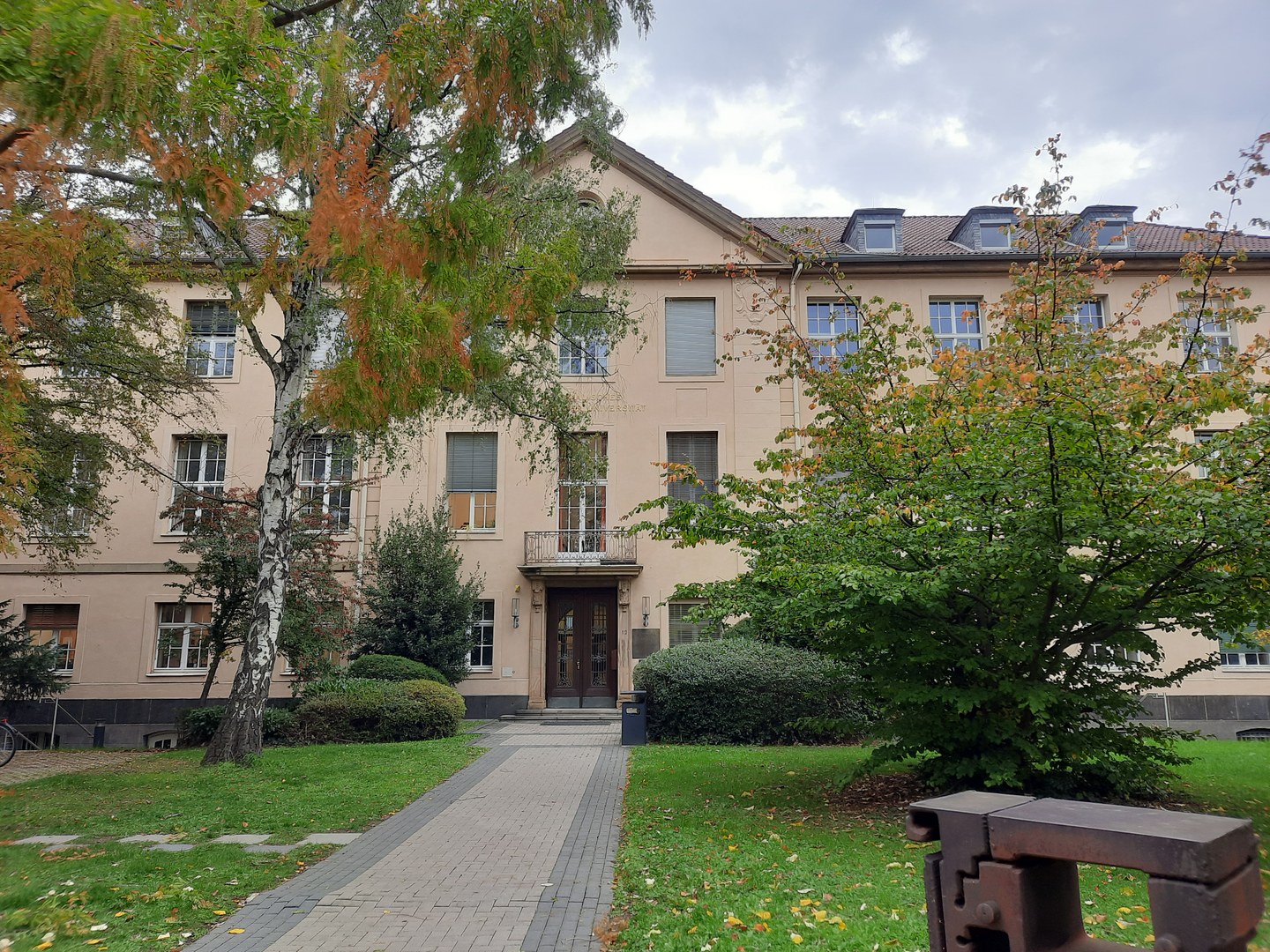
The Physikalisches Institut was built from 1911 to 1913. Heinrich Kayser, Heinrich Konen and Wolfgang Paul, among others, taught here. The Physikalisches Institut conducts research in a wide variety of fields and is also a center for teaching. Students are taught the basics of physics and can expand and deepen their knowledge in further courses of study.

News
Hunting for the Axion with a Huge Magnet
The search for an as-yet undiscovered elementary particle has been given fresh momentum as the German Research Foundation (DFG) has now greenlit the construction of a special €6 million magnet system in the Color meets Flavor Cluster of Excellence at the University of Bonn, University of Siegen and TU Dortmund University. Dubbed “BabyIAXO,” it is being built to hunt for the axion, a hitherto undetected elementary particle that could unlock one of the biggest unsolved mysteries in particle physics.
The Spellbinding World of Particle Physics
Why is there more matter than antimatter in the Universe? How does the strong interaction create it? And what is the secret of dark matter, which is believed to constitute the bulk of what makes up the Universe? These fundamental questions are being studied by the new Color meets Flavor (CmF) Cluster of Excellence at the Universities of Bonn and Siegen, TU Dortmund and Forschungszentrum Jülich. The cluster was officially inaugurated at a ceremony held on July 1 in the Wolfgang Paul lecture hall at the University of Bonn in the presence of Ina Brandes, Minister of Science and Research of North Rhine-Westphalia (NRW) and a member of its state parliament. Accompanying her were Professor Michael Hoch, Rector of the University of Bonn, Professor Stefanie Reese, Rector of the University of Siegen, and Professor Manfred Bayer, President of TU Dortmund.
Beamline for Schools: winners selected
The winning teams of the 13th edition of the Beamline for Schools (BL4S) physics competition have been chosen. BL4S, initiated by CERN, the European Laboratory for Particle Physics, is open to secondary school pupils from all around the world. Participants are invited to submit a proposal for a physics experiment to be undertaken at the beamline of a particle accelerator, either at CERN or at one of the partner institutes DESY and ELSA at the University of Bonn. In 2026, five winning teams have been chosen, based on the scientific merit of their proposals.
Excellent conditions for physics in Bonn
Ina Brandes, North Rhine-Westphalia’s Minister of Science, presented a funding commitment of 113 million euros for the renovation of the Physikalisches Institut at the University of Bonn’s administration building. The funds come from the “North Rhine-Westphalia Plan for Good Infrastructure.”
Events
Bethe Forum: Bootstrap Approaches to Scattering Amplitudes
Bethe Center for ...
09:00 AM
"Bootstrap Approaches to Scattering Amplitudes" - Für weitere Angaben folgen Sie dem Link in der Kategorie "Weitere Informationen". For further details, follow ...
Bethe Colloquium by Laura Donnay
Bethe Center
04:15 PM - 06:15 PM
"BMS Particles" - Für weitere Angaben folgen Sie dem Link in der Kategorie "Weitere Informationen". For further details, follow the link in the "Additional ...
Bethe Forum: Accelerating the Search for Disappearing Light Da...
Bethe Center for ...
09:30 AM
"Accelerating the Search for Disappearing Light Dark Matter — a Community Workshop" - Für weitere Angaben folgen Sie dem Link in der Kategorie "Weitere ...
Bethe Colloquium by Dieter Lüst
Bethe Center
04:15 PM - 06:15 PM
"TBA" - Für weitere Angaben folgen Sie dem Link in der Kategorie "Weitere Informationen". For further details, follow the link in the "Additional Information" ...

About us

An international team of scientists and students is involved in research and teaching at the Physikalisches Institut. Technical and administrative staff create the conditions for successful operation in all areas of work.
Eine Wissenschaftlerin und ein Wissenschaftler arbeiten hinter einer Glasfassade und mischen Chemikalien mit Großgeräten.
© Daniel Jacobi / Universität Bonn

Institute

Click on the link below to get an overview of the
facilities of the institute. On the page you will also find the contact persons for different
areas as well as further information.

Eine Wissenschaftlerin und ein Wissenschaftler arbeiten hinter einer Glasfassade und mischen Chemikalien mit Großgeräten.
© jcomp / Freepik

Members

More than 250 people work together at the Physikalisches Institut. Find out who we are!

Eine Wissenschaftlerin und ein Wissenschaftler arbeiten hinter einer Glasfassade und mischen Chemikalien mit Großgeräten.
© Colourbox

Policies for Protection Against Sexualized Discrimination and Violence

Sexualized discrimination and violence are not tolerated at the Physikalisches Institut. A respectful and trusting as well as non-discriminatory cooperation of all members, relatives and guests is a matter of course for the University of Bonn.

Research

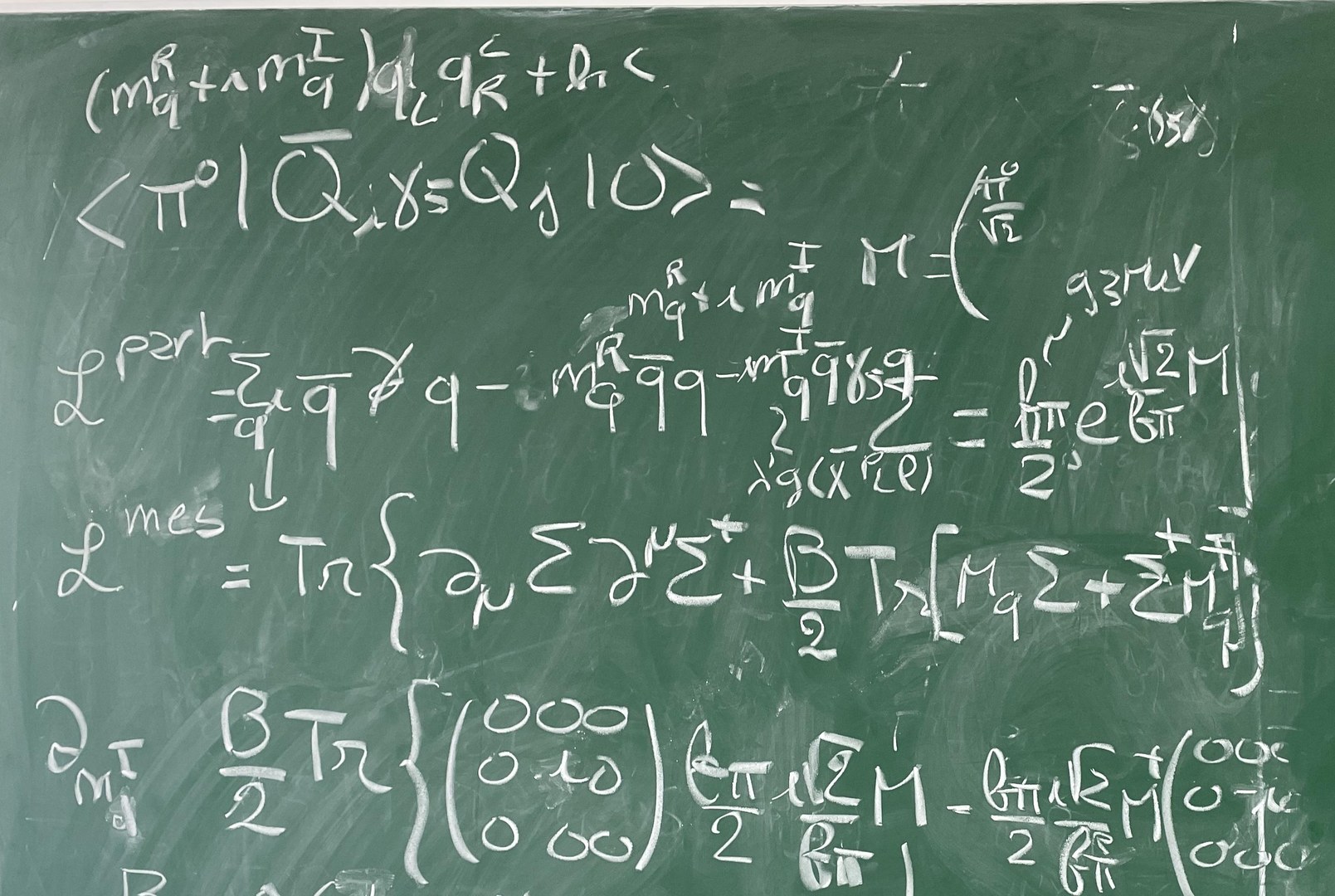
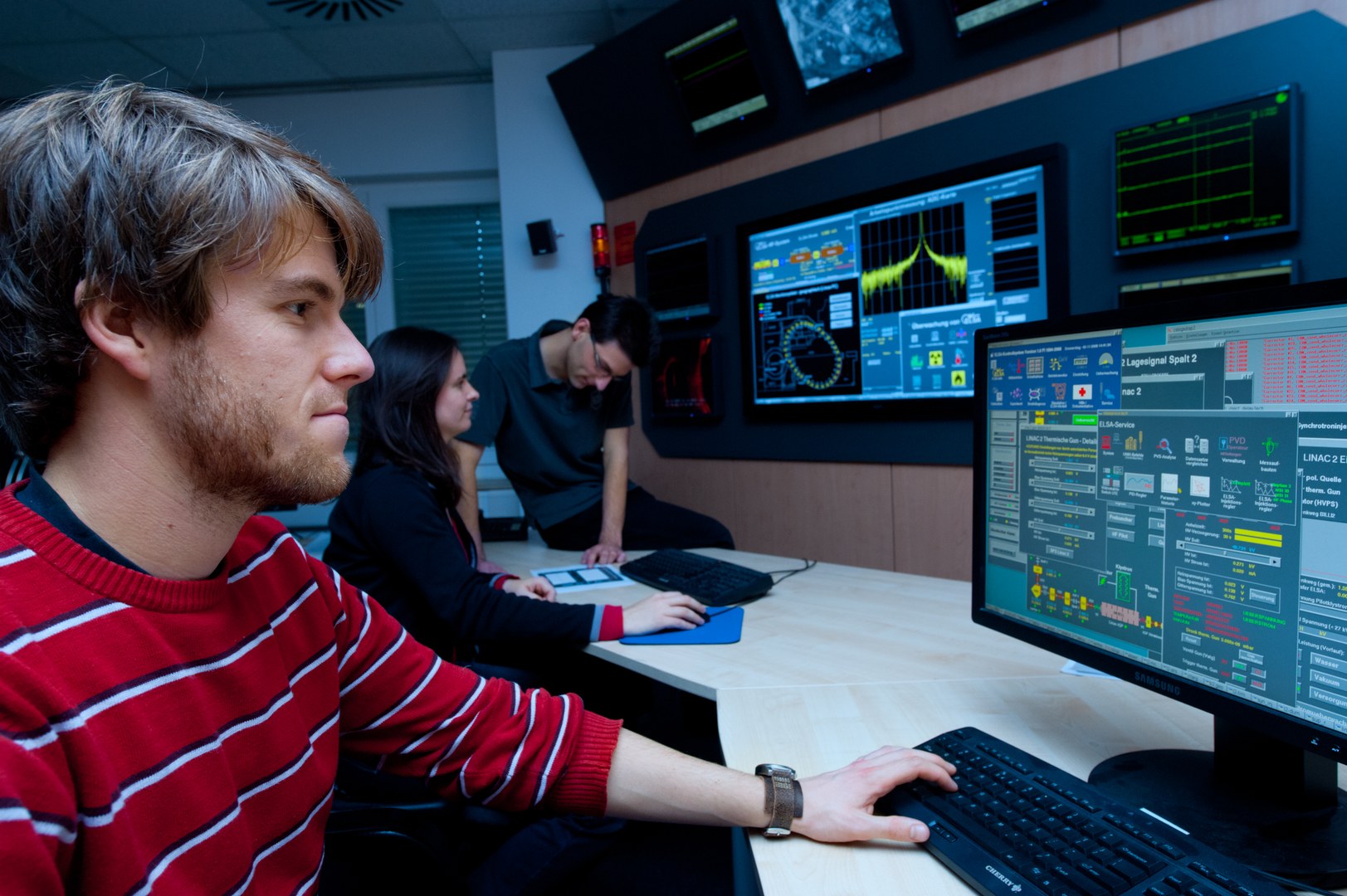
At the Physics Institute, research is conducted in a wide variety of fields. Various research facilities are available for this purpose, including the university's own ELSA accelerator facility. The broad-based research entails a large number of offers for students.
Eine Wissenschaftlerin und ein Wissenschaftler arbeiten hinter einer Glasfassade und mischen Chemikalien mit Großgeräten.
© Dominik Köhler / Universität Bonn

Research Focus

At the Physics Institute, research is conducted in the main areas of particle physics, condensed matter and photonics, and accelerator physics
Eine Wissenschaftlerin und ein Wissenschaftler arbeiten hinter einer Glasfassade und mischen Chemikalien mit Großgeräten.
© Volker Lannert / Universität Bonn

Research Groups

The Physics Institute has many different research groups working in the various focus areas.
Eine Wissenschaftlerin und ein Wissenschaftler arbeiten hinter einer Glasfassade und mischen Chemikalien mit Großgeräten.
© Volker Lannert / Universität Bonn

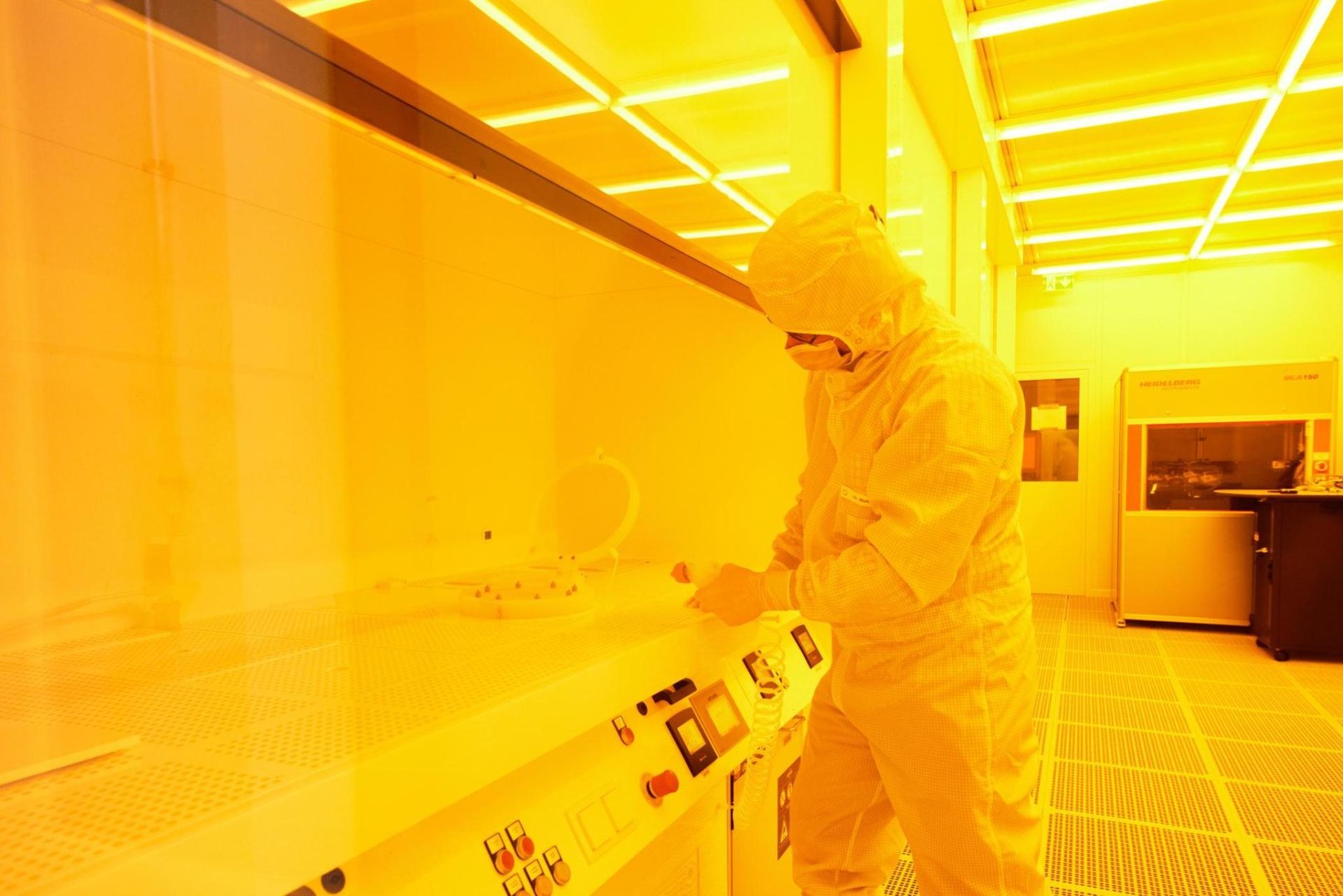
Research Facilities

The Physics Institute houses a variety of facilities from a wide range of research areas. 

The Department of Physics and Astronomy

The Department of Physics and Astronomy consists of the Physikalisches Institut, the Helmholtz Institute for Radiation and Nuclear Physics, the Institute for Applied Physics and the Argelander Institute for Astronomy. The physicists of these four institutions jointly design and conduct a broad program of offerings for students, researchers, as well as for young people and the general public.

Startseite-Studium
© Fynn Schubert / Universität Bonn

About studying physics

In the various courses of study, the fundamentals of experimental and theoretical physics are taught and comprehensively deepened.
Startseite-Öffentlichkeitsarbeit
© Highlights der Physik / Offer

Outreach activities

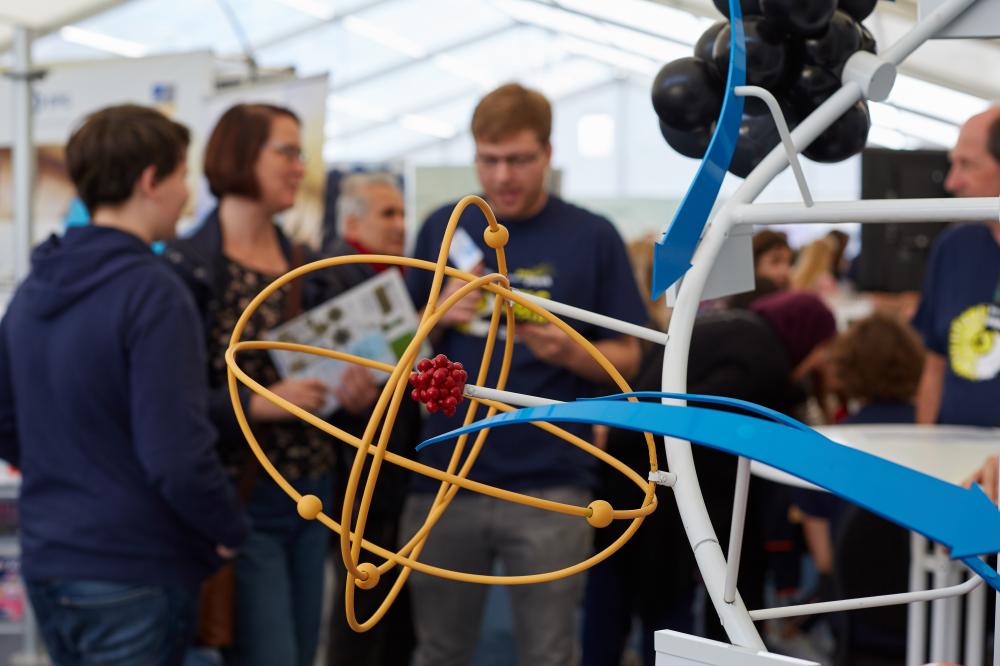
Various events in the field of public relations offer a broad audience an insight into the world of physics.

Wolfgang-Paul-Lecture

Wolfgang Paul was professor of physics at Physikalisches Institut of University of Bonn from 1952 to 1993. In remembrance of Wolfgang Paul highly distinguished physicists are regularly invited to give the Wolfgang Paul Lecture at the institute. This lecture series is made possible by the Wolfgang Paul foundation which was generously supported by himself with half of his Nobel Prize money.

Contact

Institute Director

Office

Institute Manager

Wird geladen